Benefits of Meditation and How to easily start Meditating
Back to Resources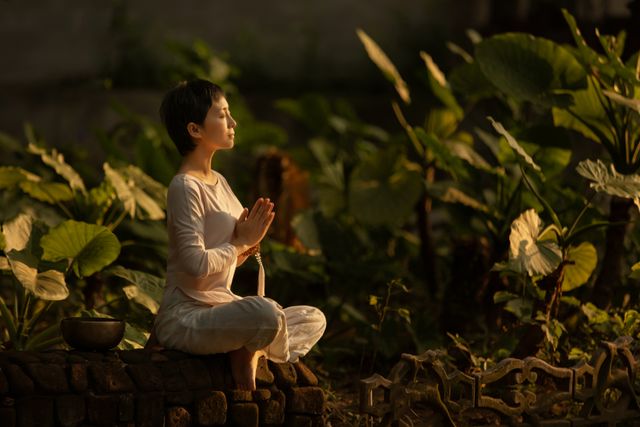
Introduction
What is meditation? Does practicing meditation daily really bring some benefits? How does one meditate?
My own experience with meditation began in the 70’s with the practice of transcendental meditation (TM), followed by Benson’s non-religious version of TM aimed at stress reduction (Benson, H., 1975), a tiny bit of Taoist meditation, and finally mindfulness meditation as advocated by Jon Kabat-Zinn (Kabat-Zinn, J., 1990). Mindfulness meditation is used increasingly by psychologists not so much for relaxation but for coping with difficult thoughts and feelings. In this post I will focus on Benson’s technique for meditating because it is a very simple introduction to meditation.
Defining meditation
The Oxford Dictionary of English defines the verb to meditate as:
• to focus one’s mind for a period of time, in silence or with the aid of chanting, for religious or spiritual purposes or as a method of relaxation.
• to contemplate, to look thoughtfully (at something).
What are benefits of meditation?
Benson carried out much research showing that daily practice of his simple form of meditation lead to stress reduction and a great variety of health benefits (Benson, 1975):
- reduces tension, anxiety, irritability, depression
- increases alertness, serenity, concentration (likely by getting us to optimum state of arousal)
- increased creativity and productivity
- decreased blood pressure in hypertensives, reduce coronary risk, reduced serum cholesterol in patients with hypercholesterolemia.
- reduced sleep onset for insomniacs,
- amelioration of stuttering
- decreased compulsive worrying, negative thoughts, self criticism
- strengthened sense of identity
- decreases addictive behaviour (for long term meditators)
Moreover religions have long used meditation as a way to gain equanimity or peace of mind. Einstein in a letter to a distraught father who had lost his young son and had asked Einstein for some comforting words wrote back:
“A human being is a part of the whole, called by us ‘Universe’, a part limited in time and space. He experiences himself, his thoughts and feelings as something separate from the rest—a kind of optical delusion of his consciousness. The striving to free oneself from this delusion is the one issue of true religion. Not to nourish it but to try to overcome it, is the way to reach the attainable measure of peace of mind.”
The New Quotable Einstein by Alice Calaprice (Princeton University Press, 2005: ISBN 0691120749), p. 206.
My own experience has taught me that meditation trains the mind to enter and maintain a reflective state in which we can explore our inner self. Many of us travel far geographically but very few of us take time to explore our inner world, our soul. By understanding your own mind and how it works, meditation reduces the tyranny of the 'self' and hence brings peace to our mind. It combats feelings of codependence because it helps you connect with yourself; reducing your dependence on others for fulfilment in life. Meditation increases your awareness to both of the inner world and the outer. Meditation helps us live a fulfilling adaptive life in the complex and demanding society we live in today.
Informal meditation
Informal methods of meditation might include:
- Warm bath, hot tub, sauna
- Rituals of various kinds having tea, chanting, singing, dancing, listening to music
- Rocking back and forth in a rocking chair
- Sitting on the seashore watching and listening to the waves coming in so rhythmically. The reverie that occurs when we sit at the ocean side looking at the vast expanse of ocean is particularly effective in helping us gain a changed perspective leading to peace of mind.
Formal meditation
Formal meditation differs from informal in that it has a definite structure or procedure and it is a ritual which is practiced regularly, usually twice a day. There are hundreds of different forms of formal meditation since nearly every religion in the world includes meditation. Buddhism alone has hundreds of different ways of meditation.
Instructions for a simple form of meditation
Here are instructions on how to meditate which is basically a slightly modified form of Benson’s 1984 technique:
- select a word, or brief phrase. You may or may not choose a word or phrase that has meaning or is in accordance with your religious or spiritual beliefs. (see discussion below)
- select a quiet environment
- sit or lie in a comfortable position, you may find lying down leads to you sleeping and therefore choose the sitting position
- close your eyes to reduce visual distractions (although some people prefer to keep eyes open in advance meditation)
- you may want to start by taking a few relaxing breaths, noticing the reflex relaxation which occurs on the out breath due to parasympathetic nervous system activity on the out breath.
- scan your body to detect any tension and then use the out breath to release that tension
- mentally repeat your focus word or phrase on the out breath, breathing naturally and regularly.
- assume a passive mental attitude to any thoughts, sensations, or feeling that you have, when they occur just gently let them pass right out of your mind without criticizing yourself and return to your word or phrase again.
- continue for about 20 minutes
- during the last few minutes you can choose to give yourself some positive suggestions or just repeat some positive affirmations
- return your awareness to the room slowly and gently
- practice the technique twice a day, preferably on an empty stomach.
Is it necessary to have a spiritual or religious component to meditation?
In Benson’s early research (Benson. H., 1975), he suggested that all forms of meditation had just two components:
1) the focusing of attention through the repetition of a word, phrase or physical activity
2) the passive disregard for intrusive thoughts when they occur and the gentle return to focused attention.
Later in 1984, Benson wrote that on the basis of his subsequent experience, he had come to the conclusion that meditation could be more powerful if it also included a third component, one involving one’s basic religious or spiritual belief system (Benson, H., 1984, 1987).
However, my experience with TM and mindfulness meditation as practiced in the West is that: advocates of these techniques either omit or minimize this spiritual component meditation. For example Germer p. 55 states that “Mindfulness is not a religion.” and that any purposeful activity that increases awareness of one’s ongoing experience is a “mindful exercise”. However, it could be argued that such exercises may be very different in their nature and effects from the daily formal mindfulness meditation of Buddhist monks practiced in a religious context. Thus the boundary between the secular and religious meditation becomes a bit unclear. And it is clear that meditation even without any religious component can still have very significant benefits.
Limitations, cautions, and contraindications for meditation:
- There may be tension release side effects; sometimes very rapid behaviour changes induced by meditation can temporarily disrupt a person's usual life.
- An occasional person may be hypersensitive to meditation and time should be shortened to less than 20 minutes.
- If your meditation enhances the effect of medications, you should inform your physician. Of course this is also a benefit of meditation; it can reduce drug dependence.
- Most important is to find a mentor, or meditation group, to check in with regularly. This will not only keep you motivated but also will be a way of sharing your experiences with others and learning from the experience of others and avoiding problems which can arise.
Concluding remarks
Meditation is a very safe and reliable way of reducing stress and improving your physical and mental health. It has the great advantage that it provides a way for you to empower yourself so that you slowly obtain not only serenity but a greater sense of personal empowerment in that you become more in control of your thinking, emotions, and behaviour.
References
Benson, H. (1975). The Relaxation Response. New York, NY: Morrow.
Benson, H. (1984). Beyond the Relaxation Response. New York, NY: Times Book.
Benson, H. (1987). Your Maximum Mind. New York, NY: Simon and Schuster.
Kabat-Zinn, J. (1990). Full Catastrophe Living. New York, NY: Delacorte Press.
Back to Resources